
Dental Bridges in Tacoma WA

Dental Bridges in South Tacoma: Fixed Tooth Replacement
What Are Dental Bridges?
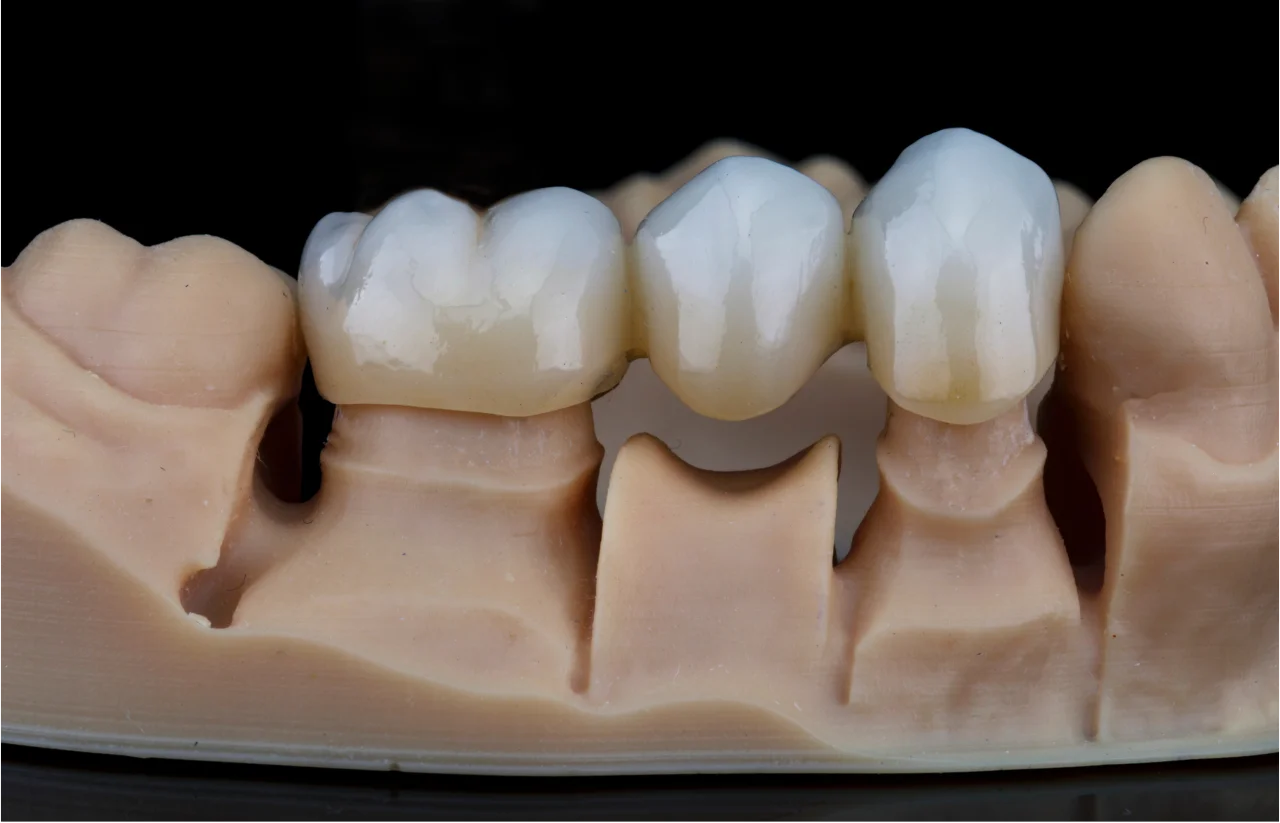
A dental bridge consists of one or more artificial teeth (pontics) held in place by dental crowns cemented onto the teeth on either side of the gap. According to the ADA, bridges are a proven option that can last 10-15 years with proper care — though placing one requires permanently reshaping the abutment teeth by removing enamel to create space for the crowns.
Bridges prevent remaining teeth from drifting into gaps, restore proper chewing function, help maintain facial shape by supporting your lips and cheeks, and distribute bite forces evenly across your arch.
Types of Dental Bridges
Traditional Fixed Bridges
The most common type, ideal for replacing one to three consecutive missing teeth when healthy natural teeth exist on both sides of the gap — crowns are placed on the reshaped abutment teeth to support the artificial tooth between them.
Advantages: Very strong, long-lasting (10-15+ years), functions like natural teeth.
Considerations: Requires permanently altering two healthy teeth, which then bear extra chewing force.
Cantilever Bridges
Anchors to teeth on only one side of the gap — useful when preserving teeth on one side is preferable, typically for front teeth with lower chewing forces.
Advantages: Preserves teeth on one side, works when traditional bridges aren't feasible.
Considerations: Less stable, not suitable for back teeth, places more stress on the abutment tooth.
Maryland Bridges (Resin-Bonded)
Uses metal or porcelain wings bonded to the back of adjacent teeth instead of full crowns — a more conservative approach that preserves natural tooth structure.
Advantages: Minimal tooth preparation, more reversible, lower cost.
Considerations: Less strong, not suitable for back teeth, wings may show through thin enamel, occasional rebonding needed. Ideal for front teeth or as a temporary solution while awaiting implants.
Implant-Supported Bridges
Uses dental implants rather than natural teeth for support — typically two implants supporting three or four teeth, preserving natural teeth completely.
Advantages: Doesn't alter natural teeth, prevents bone loss, most stable and long-lasting option.
Considerations: Requires surgery, higher initial cost, longer timeline (4-6 months).
Who Can Get Dental Bridges?
The Dental Bridge Process
Initial Consultation and Planning
Your dentist examines the gap, evaluates the abutment teeth, and takes X-rays to assess roots and bone — discussing which bridge type suits your situation. If extraction is needed first, we coordinate timing for proper healing, then take digital impressions to design your bridge.
First Appointment: Tooth Preparation
For traditional bridges, the abutment teeth are reshaped under local anesthesia and detailed impressions are taken of your prepared teeth and bite. A temporary bridge protects your teeth and maintains function while your permanent bridge is fabricated (typically 2-3 weeks).
Laboratory Fabrication
Dental technicians use your impressions to craft a custom bridge, carefully matching tooth color, shape, and size using porcelain or zirconia for strength and natural appearance.
Second Appointment: Bridge Placement
Your temporary bridge is removed and the permanent one is tried in to check fit, bite, color, and comfort. After any adjustments, it's permanently cemented — some temperature sensitivity is normal for a few days as your teeth adjust.
Dental Bridges vs. Other Tooth Replacement Options
Bridges vs. Dental Implants
Implants replace the tooth root, preserving bone without altering adjacent teeth, and typically last longer (20-30+ years vs. 10-15) but cost more and require surgery. Bridges make sense when adjacent teeth already need crowns, or when implant surgery isn't feasible due to health or bone limitations.
Bridges vs. Dentures
Partial dentures are removable and don't require altering adjacent teeth, but bridges offer superior stability and a more natural feel without slipping. Bridges work best for one to three missing teeth; for more extensive loss, dentures or implant-supported dentures become more practical.
Bridges vs. Doing Nothing
Leaving gaps causes real problems — adjacent teeth drift, bite issues develop, opposing teeth over-erupt, and bone deteriorates beneath the gap. Bridges prevent these complications and preserve your oral health long-term.
Caring for Your Dental Bridge
Daily Oral Hygiene
Brush twice daily with fluoride toothpaste, paying extra attention where the bridge meets your gums — the artificial tooth can't decay, but the abutment teeth underneath can if plaque builds up. Floss daily using floss threaders or a water flosser to clean beneath the pontic and around the abutment teeth; research confirms proper hygiene here is essential for longevity.
Regular Dental Visits
Attend cleanings every six months so your hygienist can remove tartar you can't reach at home, and your dentist can check for wear, loose cement, or decay at the margins.
Protect from Damage
Avoid chewing ice, hard candy, or other hard objects that could crack the bridge, and wear a nightguard if you grind your teeth.
Diet Considerations
Use caution with very sticky foods like caramel or taffy, which can pull a bridge loose — good oral hygiene habits protect your investment.
How Long Do Bridges Last?
Bridges typically last 10-15 years, with many patients getting 20+ years through excellent care — longevity depends on bridge type, location, oral hygiene, grinding habits, and overall health. Implant-supported bridges generally outlast traditional ones since implants don't decay like natural teeth, though the porcelain may eventually chip or wear and need replacement.
When Bridges Need Replacement
Bridges may need replacement when the cement weakens and the bridge loosens, porcelain chips or cracks, abutment teeth develop decay beneath the crowns, or gum recession exposes the bridge margins. Regular checkups catch these problems early, often allowing repair rather than full replacement — and good oral hygiene significantly extends your bridge's lifespan.
Why Choose Davis Dental Group for Dental Bridges in Tacoma?
- Advanced 3D Scanning Technology: Precise imaging for accurate treatment planning.
- Walk-Ins Welcome: Stop by our Tacoma office anytime — no appointment needed.
- Same-Day Consultations: Available when scheduling allows.
- Free Consultations: Expert guidance with no obligation.
- Comprehensive Care in One Location: From consultation to final treatment, all under one roof — no referrals needed
- Experienced Team:Dedicated to your comfort throughout treatment.
Related Services
Dental Crowns - Bridges use crowns on abutment teeth to anchor the restoration.
Dental Implants - An alternative that preserves adjacent teeth and bone.
Dentures - A removable option for more extensive tooth loss.
Replace Missing Teeth with Dental Bridges
Restore your smile with a custom dental bridge at Davis Dental Group in South Tacoma. Serving South Tacoma, Graham, Roy, Spanaway, Frederickson, Eatonville, and JBLM families.
Schedule Your Bridge Consultation
Call to Discuss Tooth Replacement
Major PPO insurances accepted.