Implant-Supported Dentures in Tacoma
Implant-Supported Dentures in South Tacoma: Stable, Secure Dentures
Implant-Supported Denture Benefits:
- No slipping or clicking: Eat and speak with complete confidence
- No messy adhesives: Secure snap-on connection
- Improved chewing: Up to 70% of natural chewing power
- Prevents bone loss: Implants stimulate jawbone
- Removable for cleaning: Take out at night, snap on in morning
- Serving: South Tacoma, Graham, Roy, Spanaway, Frederickson, Eatonville, and JBLM families
What Are Implant-Supported Dentures?
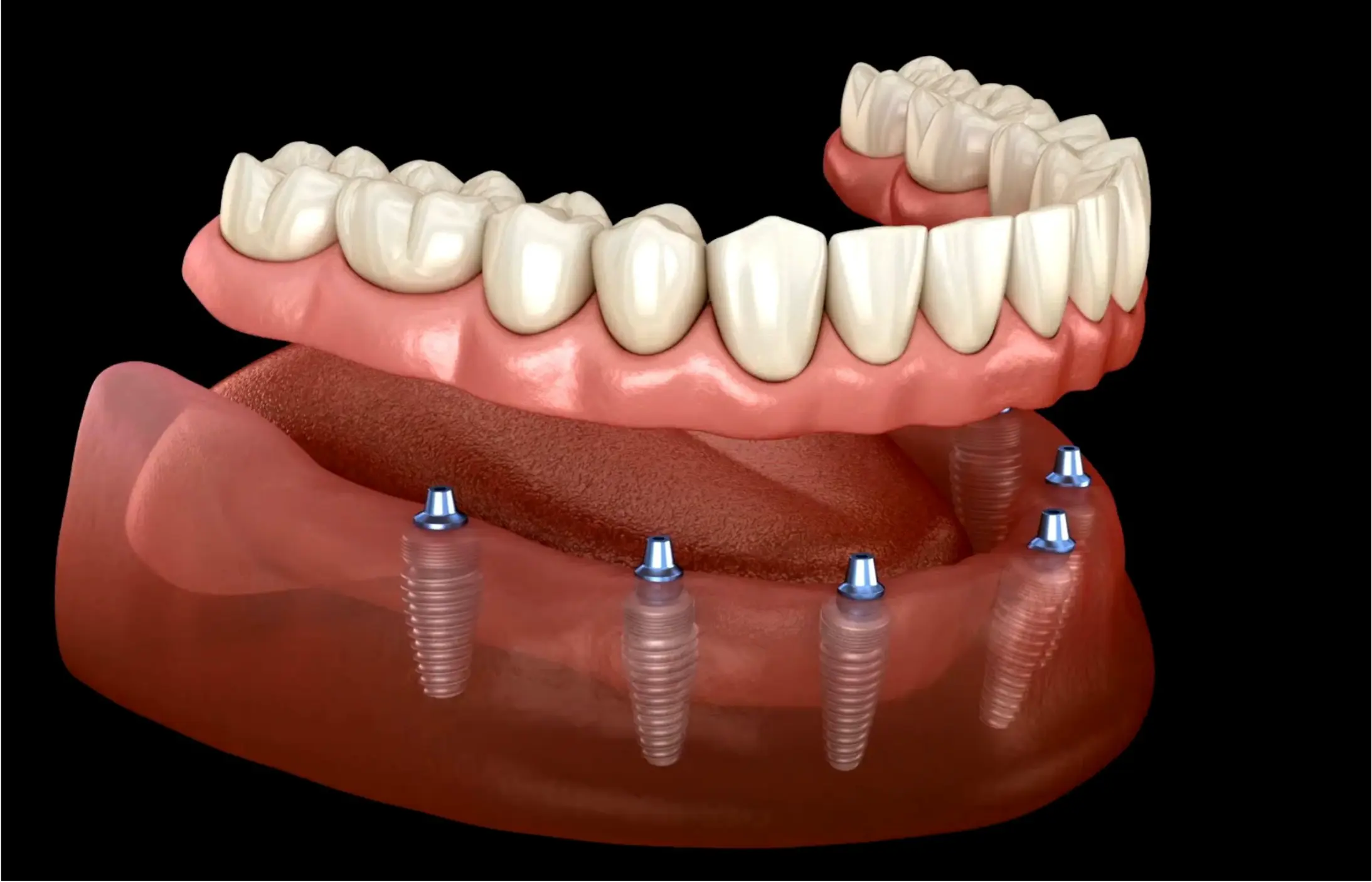
Implant-supported dentures are removable dentures that snap onto dental implants surgically placed in your jawbone. According to the American Academy of Implant Dentistry, implant-supported dentures provide dramatically better stability, function, and quality of life compared to traditional dentures while costing less than fixed implant solutions like All-on-4.
Typically, 2-4 implants are placed in each arch (upper or lower jaw). After the implants heal and integrate with bone (3-6 months), attachments are connected to the implants that protrude slightly through the gum. Your denture has corresponding receptacles that snap onto these attachments, holding the denture firmly in place.
You remove the denture at night for cleaning and to let gum tissue rest, then snap it back on each morning. The secure connection eliminates the slipping, gagging, and social embarrassment that plague traditional denture wearers.
Types of Implant-Supported Dentures
Ball-Attachment (Stud-Attachment) Dentures
Ball-attachment dentures are the most common and economical implant-supported option. Each implant has a ball-shaped metal attachment (like a snap button) protruding through the gum. Your denture has sockets with rubber O-rings that snap over the balls, creating a secure but easily removable connection.
Advantages: Lower cost, requires only 2-4 implants, simple attachment mechanism, easy to remove and reattach, straightforward maintenance (O-rings replaced periodically).
Ideal for: Patients seeking affordable stability improvement, those with moderate bone loss, lower arch dentures (where stability problems are worst).
Bar-Retained Dentures
Bar-retained dentures use a thin metal bar that follows the curve of your jaw, connecting 2-4 implants. Your denture fits over this bar with clips or other attachments, distributing chewing forces evenly across all implants. The bar provides additional support and stability compared to individual ball attachments.
Advantages: Superior stability, even force distribution, potentially longer-lasting, better for heavy chewing forces.
Considerations: Higher cost, requires more space beneath denture, slightly more complex maintenance.
Ideal for: Patients wanting maximum stability, those with adequate bone for bar placement, upper arch where additional support helps.
Implant-Supported Dentures vs. Traditional Dentures
Stability and Security
Traditional dentures rest on gums, relying on suction and adhesives. They slip during eating and speaking, causing embarrassment and anxiety. Lower dentures are especially problematic—many wearers can barely keep them in place.
Implant-supported dentures snap securely onto implants, eliminating slipping completely. You eat, laugh, and speak with confidence knowing your dentures won't move. Research in the Journal of Prosthetic Dentistry confirms implant dentures significantly improve patient satisfaction and quality of life.
Chewing Ability
Traditional dentures restore only 20-25% of natural chewing power. Many foods become off-limits—steak, apples, corn on the cob, crusty bread. Meals become frustrating rather than enjoyable.
Implant-supported dentures restore up to 70% of natural chewing power. You can eat most foods you enjoyed with natural teeth, greatly improving nutrition and social dining experiences.
Bone Preservation
When you lose teeth, the jawbone beneath them begins shrinking from lack of stimulation. Traditional dentures accelerate this bone loss because they press on the gums, damaging underlying bone. Over years, this creates a sunken, aged facial appearance and makes dentures fit progressively worse.
Dental implants stimulate bone just like natural tooth roots, preventing deterioration. According to the Centers for Disease Control and Prevention, maintaining bone structure is critical for both function and facial aesthetics.
Comfort
Traditional dentures often cause sore spots where they rub against gums. Upper dentures cover the palate, affecting taste and causing gagging. The constant movement creates friction and irritation.
Implant-supported dentures don't move, eliminating friction and sore spots. Lower implant dentures don't need to cover as much area since implants provide stability. Upper dentures can be designed with less palate coverage, improving taste and comfort.
Cost Comparison
Traditional dentures cost less initially but need frequent adjustments, relining every 2-3 years, and complete replacement every 5-8 years as bone loss changes jaw shape. These ongoing costs add up over time.
Implant-supported dentures cost more upfront but last much longer with minimal maintenance. The implants can last a lifetime, and the denture needs replacement only every 10-15 years. Over 20 years, implant dentures often cost less than traditional dentures while providing vastly superior function.
Implant-Supported Dentures vs. All-on-4
Both implant-supported dentures and All-on-4 eliminate denture slipping, but they're fundamentally different solutions:
Implant-Supported Dentures:
- Removable—take out for cleaning
- Require 2-4 implants per arch
- Lower cost
- Easier to clean thoroughly
- Can be removed if implant issues develop
All-on-4 Fixed Implants:
- Fixed—never come out
- Require 4-6 implants per arch
- Higher cost
- Most like natural teeth
- Cleaned like natural teeth (brushing, flossing)
Choose implant-supported dentures if you want significant improvement over traditional dentures at moderate cost, prefer removability for thorough cleaning, or have budget constraints. Choose All-on-4 if you want teeth that never come out and can invest in the closest experience to natural teeth.
The Implant-Supported Denture Process
Consultation and Planning
Your journey begins with comprehensive examination including 3D cone beam CT scan evaluating bone quality and quantity. We discuss your goals, concerns, and budget. Digital imaging shows exactly where implants will be placed.
If you currently wear dentures, we evaluate whether they can be converted to implant-supported or if new dentures are needed.
Implant Placement
During a minor surgical procedure under local anesthesia, 2-4 implants are placed in strategic positions in your jawbone. For lower arch, implants typically go in the front where bone is densest. For upper arch, placement depends on bone availability and sinus locations.
Most patients experience minimal discomfort after surgery, easily managed with over-the-counter pain medication. You continue wearing your existing dentures during healing (with adjustments if needed).
Healing Period
Over 3-6 months, bone grows around and fuses with the implants through osseointegration. This creates the permanent, stable foundation for your implant-supported denture. During this time, you attend periodic checkups monitoring healing progress.
Attachment and Denture Connection
Once healing is complete, attachments are connected to the implants. For ball-attachment dentures, ball-shaped studs are attached. For bar-retained dentures, a custom bar is fabricated connecting the implants.
Your denture is modified with corresponding receptacles or clips. Once attached, you immediately experience the secure, stable fit. We teach you how to snap the denture on and off, which becomes second nature within days.
Final Adjustments
We make any needed adjustments ensuring comfortable fit and proper bite. Most patients adapt to implant-supported dentures within a week and wonder why they didn't do it sooner.
Caring for Implant-Supported Dentures
Daily Cleaning
Remove your denture nightly and clean it thoroughly with denture cleaner or mild soap. Brush the attachments and O-rings. Clean around the implants and attachments in your mouth with a soft toothbrush, removing any food particles or plaque.
Implant Care
Even though you have dentures, the implants and surrounding gum tissue require attention. Brush around implants twice daily. Some patients use water flossers cleaning around attachments. Regular care prevents peri-implantitis (inflammation around implants).
Regular Dental Visits
Attend dental checkups every 6 months. Your dentist examines implants, checks attachments, evaluates denture condition, and makes any needed adjustments. Ball-attachment O-rings need periodic replacement (annually or as needed) to maintain secure snap.
Denture Maintenance
Implant-supported dentures last longer than traditional dentures because they don't constantly move and wear. However, they eventually need relining or replacement every 10-15 years as your mouth changes slightly over time.
Who Benefits from Implant-Supported Dentures?
Current denture wearers frustrated with loose, unstable dentures: If your dentures slip, require constant adhesive, or limit your food choices, implant support transforms your experience.
New denture patients wanting better stability: Starting with implant-supported dentures from the beginning avoids years of frustration with traditional dentures.
Patients with moderate bone loss: Implant-supported dentures require less bone than All-on-4, making them suitable for more patients. Minor bone grafting or sinus lifts can be performed if needed—procedures we offer in-house.
Budget-conscious patients: Implant-supported dentures provide excellent improvement at significantly lower cost than fixed implant solutions.
Those preferring removability: Some patients like being able to remove their dentures for thorough cleaning and at night.
Related Services
Dental Implants- Comprehensive implant dentistry including various tooth replacement solutions.
All-on-4 Implants - Fixed teeth option for patients wanting permanent implant solution.
Single Tooth Implants - Replace individual missing teeth with implant-supported crowns.
Family Dentistry - Complete dental care including tooth extractions and preparatory treatments.
End Denture Frustration with Implant Support
Transform your denture experience with implant-supported dentures at Davis Dental Group in South Tacoma. Eliminate slipping, improve chewing, and regain confidence. Schedule your consultation to learn if implant-supported dentures are right for you.
Serving South Tacoma, Graham, Roy, Spanaway, Frederickson, Eatonville, and JBLM military families with advanced implant denture solutions.
Schedule Your Free Consultation
Call to Discuss Implant Dentures
Most PPO insurances accepted. Secure, stable implant-supported dentures.
Why Choose Davis Dental Group
- Advanced 3D Scanning Technology: Precise imaging for accurate implant planning and placement. Better planning means better results.
- Walk-Ins Welcome: Stop by our Tacoma office anytime for consultations—no appointment needed.
- Same-Day Consultations: We offer same-day appointments when available, so you don't have to wait.
- Free Consultations: Get expert guidance with no obligation. We'll evaluate your situation and discuss your options.
- Comprehensive Care in One Location: From consultation to implant placement to final restoration, everything happens right here. No referrals to multiple specialists.
- Experienced Team: Our dental professionals have extensive experience in implant dentistry and prioritize your comfort throughout treatment.