Single Tooth Implant in Tacoma, WA
Single Tooth Implants in South Tacoma: Replace One Missing Tooth Permanently
Single Tooth Implant Benefits:
- Preserve healthy teeth: No grinding adjacent teeth like bridges require
- Prevent bone loss: Implant stimulates jawbone like natural tooth root
- Natural appearance: Custom crown matches your teeth perfectly
- Permanent solution: Can last lifetime with proper care
- Full function: Eat, speak, and smile confidently
- Serving: South Tacoma, Graham, Roy, Spanaway, Frederickson, Eatonville, and JBLM families
What Is a Single Tooth Implant?
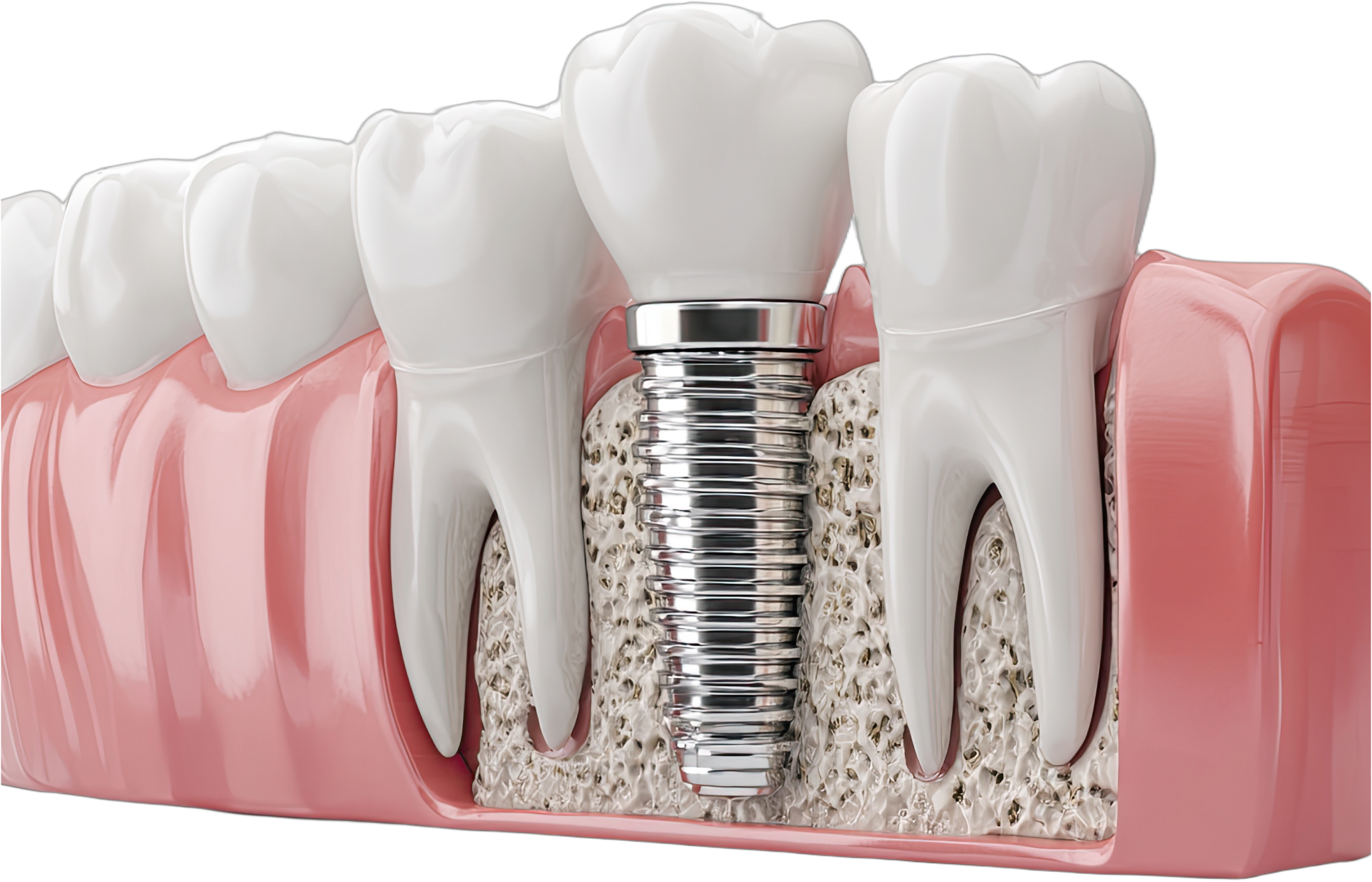
A single tooth implant replaces one missing tooth using three components: a titanium post (implant) surgically placed in your jawbone, an abutment (connector piece) attached to the implant, and a custom porcelain crown completing the restoration. According to the American Academy of Implant Dentistry, single tooth implants represent the gold standard for individual tooth replacement with 95%+ success rates.
The titanium implant acts as an artificial tooth root, integrating with your jawbone through osseointegration. This creates a permanent, stable foundation supporting the crown. Once complete, your implant restoration functions exactly like a natural tooth—no one will know it's not your original tooth.
Single tooth implants work for any tooth location—front teeth (incisors and canines) for aesthetics, premolars balancing function and appearance, or molars requiring strength for heavy chewing. Your dentist selects appropriate implant size and crown design based on which tooth is being replaced.
Why Choose Single Tooth Implants Over Bridges?
Preserve Adjacent Teeth
Traditional bridges require grinding down healthy teeth on both sides of the gap to serve as anchors. This permanently removes enamel, weakening these teeth and making them susceptible to future problems. Single tooth implants are self-supporting—adjacent teeth remain completely untouched and healthy.
Prevent Bone Loss
When you lose a tooth, the jawbone beneath it begins deteriorating from lack of stimulation. This bone loss continues under bridges because the replacement tooth doesn't extend into the bone. Implants stimulate bone just like natural tooth roots, preventing deterioration and maintaining jaw structure. Research in the Journal of Dental Research confirms implants are the only tooth replacement preventing bone loss.
Superior Longevity
Bridges typically last 7-10 years before requiring replacement. The crowned anchor teeth often develop problems over time from the grinding needed for bridge placement. Single tooth implants can last 20-30+ years, often a lifetime, with proper care. While implants cost more initially, their longevity provides better long-term value.
Easier Oral Hygiene
Bridges create cleaning challenges—you must use special floss threaders to clean underneath. Food can trap beneath bridges, increasing cavity risk. Implant crowns are cleaned exactly like natural teeth with normal brushing and flossing, making maintenance simple.
The Single Tooth Implant Process
Common Reasons for Single Tooth Loss
Severe Decay: Deep cavities that progress beyond what fillings or crowns can repair may require extraction and implant replacement.
Failed Root Canal: Occasionally, root canal treatment doesn't successfully save a tooth, necessitating extraction and replacement with an implant.
Trauma or Injury: Accidents, sports injuries, or falls can knock out teeth or damage them beyond repair. Implants provide excellent replacement for traumatically lost teeth.
Cracked Tooth Root: Cracks extending below the gum line into the tooth root cannot be repaired. These teeth require extraction and implant replacement.
Congenital Missing Tooth: Some people are born missing certain teeth (often upper lateral incisors or lower second premolars). Once jaw growth is complete, implants provide ideal replacement.
Periodontal Disease: Advanced gum disease can loosen teeth beyond saving. After treating the gum disease, implants replace lost teeth.
Caring for Your Single Tooth Implant
Daily Oral Hygiene
Brush your implant crown twice daily with a soft-bristled toothbrush just like natural teeth. Floss once daily around the implant, removing plaque from the crown and gum line. The Centers for Disease Control and Prevention emphasizes that excellent oral hygiene is essential for long-term implant success.
While implant crowns can't get cavities, the gum tissue surrounding implants requires diligent cleaning to prevent peri-implantitis (inflammation around implants).
Regular Dental Visits
Attend dental cleanings every six months. Your hygienist uses special instruments that won't scratch implant surfaces while removing plaque and tartar. Regular exams monitor implant health and catch problems early.
Protect from Damage
Avoid biting extremely hard objects like ice, hard candy, or nutshells. If you grind your teeth at night, wear a custom nightguard protecting both implants and natural teeth from excessive forces. Implant crowns can chip or crack like natural teeth, requiring crown replacement.
Avoid Tobacco
Smoking significantly increases implant failure risk by impairing healing and bone integration. If you smoke, quitting before implant surgery dramatically improves success rates.
Single Tooth Implant Success Factors
Adequate Bone: Successful implants require sufficient bone density and volume. Our 3D imaging evaluates bone quality before treatment. Insufficient bone often can be augmented through grafting procedures.
Adequate Bone: Successful implants require sufficient bone density and volume. Our 3D imaging evaluates bone quality before treatment. Insufficient bone often can be augmented through grafting procedures.
We offer comprehensive bone grafting and sinus lift procedures in-house—specialized treatments not available at many dental offices:
- Socket preservation grafting: Performed immediately after extraction to prevent bone loss
- Ridge augmentation: Rebuilding bone width or height where it's deficient
- Block bone grafts: Using larger bone sections for significant deficiencies
- Sinus lift procedures: For upper back teeth where bone height is limited
Having these capabilities means you receive complete implant treatment under one roof without referrals to specialists.
Good Oral Health: Active gum disease must be treated before implant placement. Healthy gums are essential for implant success and longevity.
Overall Health: Certain conditions like uncontrolled diabetes may affect healing. We review your complete health history determining if single tooth implants are appropriate.
Non-Smoking: Tobacco use dramatically increases implant failure rates. We strongly encourage patients to quit smoking before treatment.
Proper Care: Following post-surgical instructions and maintaining excellent oral hygiene are critical for success. Patients who attend regular checkups enjoy the best outcomes.
Timeline and Expectations
Consultation: Initial visit includes comprehensive examination, 3D imaging, and treatment planning.
Implant Surgery: 1-2 hours for implant placement. Most patients return to work the next day.
Healing Period: 3-6 months for osseointegration. You wear a temporary restoration during healing if needed.
Abutment Placement: Brief appointment once healing is complete.
Crown Delivery: Final restoration placed 2 weeks after abutment placement.
Total Timeline: 4-8 months from implant placement to completed restoration. While this seems lengthy, most of this time is healing—you won't need frequent appointments.
Related Services
Dental Implants - Comprehensive implant dentistry including multiple teeth replacement and full arch solutions.
Dental Crowns - The visible restoration completing single tooth implants, custom-designed to match your smile.
Root Canal Treatment - When possible, root canals save natural teeth, avoiding need for implants.
Dental Cleanings - Regular maintenance essential for long-term single tooth implant health.
Replace Your Missing Tooth Permanently
Restore your smile with a natural-looking single tooth implant at Davis Dental Group in South Tacoma. Our experienced team uses advanced 3D imaging and proven techniques ensuring successful tooth replacement. Schedule your free consultation to learn if a single tooth implant is right for you.
Serving South Tacoma, Graham, Roy, Spanaway, Frederickson, Eatonville, and JBLM military families with comprehensive implant dentistry.
Schedule Your Free Consultation
Call to Discuss Single Tooth Replacement
Most PPO insurances accepted. Permanent single tooth replacement with advanced 3D imaging.
Why Choose Davis Dental Group
- Advanced 3D Scanning Technology: Precise imaging for accurate implant planning and placement. Better planning means better results.
- Walk-Ins Welcome: Stop by our Tacoma office anytime for consultations—no appointment needed.
- Same-Day Consultations: We offer same-day appointments when available, so you don't have to wait.
- Free Consultations: Get expert guidance with no obligation. We'll evaluate your situation and discuss your options.
- Comprehensive Care in One Location: From consultation to implant placement to final restoration, everything happens right here. No referrals to multiple specialists.
- Experienced Team: Our dental professionals have extensive experience in implant dentistry and prioritize your comfort throughout treatment.