Dental Implants in South Tacoma: Permanent Tooth Replacement
Dental Implant Benefits:
- Permanent solution: Lasts 20-30+ years, often lifetime
- Preserve bone: Prevent jaw bone deterioration from tooth loss
- Natural appearance: Look and feel like real teeth
- Full function: Eat, speak, and smile confidently
- Protect other teeth: Don't require altering adjacent teeth
- Serving: South Tacoma, Graham, Roy, Spanaway, Frederickson, Eatonville, and JBLM families
What Are Dental Implants?
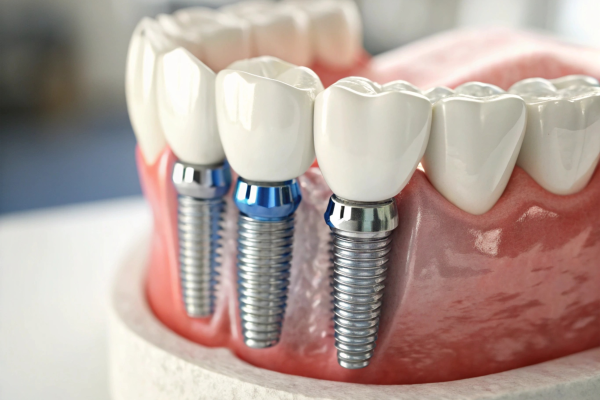
A dental implant is a titanium post surgically placed into your jawbone, serving as an artificial tooth root. After the implant integrates with your bone (a process called osseointegration), an abutment connects the implant to a custom dental crown, creating a complete tooth replacement. According to the American Academy of Implant Dentistry, dental implants are the gold standard for tooth replacement with a 95%+ success rate.
Implants replace single missing teeth, support bridges replacing multiple adjacent teeth, or anchor dentures providing stable, secure fit. Unlike traditional bridges requiring grinding down healthy adjacent teeth, or removable dentures that slip and limit eating, implants preserve surrounding teeth while providing superior function and comfort.
The titanium material is biocompatible, meaning your body accepts it without rejection. As bone grows around the implant, it becomes permanently anchored in your jaw, providing a foundation as strong as natural tooth roots.
Types of Dental Implant Solutions
When you're missing one tooth, a single implant with attached crown provides the most conservative replacement. The implant fills the gap without affecting neighboring teeth, preserving their natural structure. Single implants are ideal after tooth loss from decay, trauma, failed root canal, or congenital absence.
Implant-Supported Bridges
Missing several adjacent teeth? An implant-supported bridge uses two or more implants to support a bridge of artificial teeth. This eliminates the need for traditional bridges that require grinding down healthy teeth on either side of the gap. Implant bridges provide superior stability and longevity compared to tooth-supported bridges.
Implant-Supported Dentures (Implant Over Dentures)
For patients missing all teeth in an arch, implant-supported dentures (also called implant over dentures) offer dramatic improvement over traditional removable dentures. Unlike conventional dentures that rest only on gums and slip during eating or speaking, implant over dentures snap securely onto implants, providing stability and confidence while remaining removable for cleaning.
How Implant Over Dentures Work: Typically 2-4 implants per arch are placed in the jawbone. After healing, attachments are connected to the implants. Your denture has corresponding receptacles that snap onto these attachments, holding the denture firmly in place. You remove the denture at night for cleaning, then snap it back on each morning.
Types of Implants Over Dentures:
Ball-Attachment (Stud-Attachment) Dentures: The most common and economical option. Each implant has a ball-shaped attachment protruding through the gum. The denture has sockets with rubber O-rings that snap over the balls, creating a secure connection. Easy to remove and reattach.
Bar-Retained Dentures: A thin metal bar follows the curve of your jaw, connecting 2-4 implants. The denture fits over the bar with clips or attachments, distributing chewing forces evenly across the implants. Provides more stability than ball attachments but costs more.
Benefits Over Traditional Dentures:
- Eliminates slipping: Eat and speak confidently without dentures moving
- No messy adhesives: Snap-on connection is secure and clean
- Improved chewing: Restore up to 70% of natural chewing power vs. 25% with traditional dentures
- Prevents bone loss: Implants stimulate jawbone, preventing the facial collapse that occurs with traditional dentures
- Better taste: Lower dentures don't cover the palate, allowing normal taste sensation
- More affordable than fixed solutions: Requires fewer implants than All-on-4 or fixed bridges
Implant Over Dentures vs. All-on-4: Implant over dentures are removable—you take them out for cleaning. All-on-4 creates fixed teeth that never come out. Both eliminate denture slipping, but implant over dentures cost less (requiring fewer implants) while All-on-4 provides the closest experience to natural teeth. We help you choose based on your budget, preferences, and lifestyle.
Ideal Candidates: Current denture wearers frustrated with loose, uncomfortable dentures. Patients wanting stability and confidence without the investment of fixed implant teeth. Those needing easy removability for thorough cleaning. Patients with moderate bone loss who may not be candidates for All-on-4 without extensive grafting.
All-on-4® and All-on-X Fixed Solutions
For patients wanting teeth that never come out, All-on-4 uses four strategically angled implants per arch to support a full set of fixed replacement teeth, often allowing same-day tooth replacement. Unlike implant over dentures, All-on-4 restorations are permanently attached—you care for them like natural teeth without removing them.
Customized All-on-X Solutions: While All-on-4 uses four implants, we customize treatment based on your bone quality and jaw anatomy. Some patients benefit from All-on-5 or All-on-6 configurations using five or six implants for added stability and optimal force distribution. We determine the best number of implants during your comprehensive evaluation, ensuring superior long-term results for your specific situation.
Full Arch Implant Bridges
For the most permanent solution, individual implants can support a fixed bridge replacing all teeth in an arch. These never come out—you care for them exactly like natural teeth with brushing and flossing. Full arch implant bridges provide the closest experience to having natural teeth.
Who Can Get Dental Implants?
Certain conditions like uncontrolled diabetes, gum disease, heavy smoking, prior jaw radiation, or bone-related medications require evaluation, but many patients can still qualify with personalized care.
Success & Longevity Dental implants have a 95–98% success rate. With proper care, they can last 20–30+ years or even a lifetime. The crown may need replacement after 10–15 years, while the implant itself remains permanent—lasting longer than bridges or dentures.
The Dental Implant Process
Comprehensive Evaluation
Your implant journey begins with thorough examination including 3D cone beam CT scan showing bone quality, quantity, and anatomy. This advanced imaging allows precise implant planning, identifying optimal placement positions and any bone grafting needs. We evaluate your overall health, medications, and any conditions affecting healing.
Research in the Journal of Oral Implantology confirms that detailed pre-surgical planning using 3D imaging significantly improves implant success rates.
Treatment Planning
Using your 3D scans, we create a detailed surgical plan showing exact implant positions, angles, and depths. Computer-guided planning ensures implants avoid nerves and sinuses while positioning for optimal aesthetics and function. We discuss the complete treatment timeline, from surgery through final restoration.
Bone Grafting (If Needed)
If your jawbone lacks sufficient volume for implant support, bone grafting builds up the area. Grafting material (from your body, donor tissue, or synthetic sources) is placed where bone is deficient. Healing takes 3-6 months before implant placement.
Many patients who lost teeth years ago need grafting because bone resorbs without tooth roots stimulating it. According to the American Dental Association, modern bone grafting techniques make implants possible for most patients.
Types of bone grafting we offer:
- Socket preservation: Grafting immediately after extraction prevents bone loss
- Ridge augmentation: Rebuilding width or height of the jawbone
- Block bone grafting: Using larger bone sections for significant defects
- Particulate grafting: Using smaller bone particles for moderate deficiencies
Sinus Lift Procedures
For upper back teeth implants, insufficient bone height between the jaw and maxillary sinus often requires a sinus lift. This procedure elevates the sinus membrane and places bone graft material beneath it, creating adequate height for implant placement.
We offer sinus lifts—a specialized procedure not available at many dental offices. This means you receive comprehensive implant treatment under one roof without referrals to specialists. Sinus lifts can be performed as a separate procedure before implant placement or sometimes simultaneously with implant surgery, depending on available bone height.
The procedure has high success rates and allows implant placement in areas that would otherwise be impossible due to insufficient bone.
Implant Surgery
Implant placement is typically performed under local anesthesia, though sedation is available for anxious patients or complex cases. Your dentist creates a small opening in the gum, prepares a precise space in the bone, and places the titanium implant. The gum is sutured closed, and healing begins.
Most patients report minimal discomfort after surgery, easily managed with over-the-counter pain medication. You can typically return to work the next day.
Healing and Osseointegration
Over 3-6 months, your bone grows around the implant, creating a permanent bond. During this time, you may wear a temporary replacement tooth if the implant is in a visible area. This healing phase is crucial for long-term implant success.
Abutment and Crown Placement
Once osseointegration is complete, an abutment (connector piece) is attached to the implant. After the gum heals around the abutment (typically 2 weeks), we take impressions for your custom crown. The final crown is designed to match your natural teeth perfectly in color, shape, and size.
Your completed implant restoration looks, feels, and functions like a natural tooth.
Implants vs. Other Tooth Replacement Options
Implants vs. Bridges
Traditional bridges require grinding down healthy adjacent teeth to serve as anchors. This permanently alters these teeth, making them susceptible to future problems. Implants replace the missing tooth independently, preserving surrounding teeth.
Bridges last 7-10 years on average. Implants last 20-30+ years, often a lifetime. While implants cost more initially, their longevity provides better long-term value.
Implants vs. Dentures
Removable dentures rest on gums and may slip during eating or speaking. They typically cover the roof of your mouth, affecting taste and temperature sensation. Many denture wearers struggle with limited food choices and social embarrassment from loose dentures.
Implants (especially implant-supported dentures or fixed bridges) eliminate these problems. You eat anything you want, speak clearly, and never worry about dentures falling out. Implants also prevent the bone loss that causes dentures to fit poorly over time.
Implants vs. Doing Nothing
Leaving gaps from missing teeth causes significant problems. Adjacent teeth drift into the space, creating bite problems and increasing cavity risk. Opposing teeth over-erupt. Bone deteriorates where tooth roots are missing, changing your facial appearance and making future tooth replacement more difficult.
Implants prevent these complications by maintaining bone and proper tooth spacing.
Caring for Your Dental Implants
Daily Oral Hygiene
Brush twice daily and floss once daily around implant restorations just like natural teeth. While implant crowns can't get cavities, the gum tissue surrounding implants requires diligent cleaning to prevent peri-implantitis (inflammation around implants).
The Centers for Disease Control and Prevention emphasizes that maintaining excellent oral hygiene is essential for implant longevity.
Regular Dental Visits
Attend dental cleanings every six months (or more frequently if recommended). Your hygienist uses special instruments that won't scratch implant surfaces while removing plaque and tartar. Regular exams monitor implant health and catch problems early.
Protect from Damage
Avoid chewing hard objects like ice or hard candy. If you grind your teeth, wear a nightguard protecting both implants and natural teeth from excessive forces. Implant crowns can chip or crack like natural teeth, requiring replacement.
Avoid Tobacco
Smoking significantly increases implant failure risk by impairing healing and bone integration. If you smoke, quitting before implant surgery dramatically improves success rates.
Success Rates and Longevity
Dental implants have a 95-98% success rate when placed by experienced dentists in appropriate candidates. Success rates are even higher in the lower jaw where bone is denser. With proper care, implants commonly last 20-30+ years, with many functioning for life.
The implant crown typically needs replacement every 10-15 years due to normal wear, but the implant itself remains permanently anchored in bone. This is far superior to bridges (7-10 years) or dentures (5-8 years before needing replacement or relining).
Related Services
Family Dentistry - Comprehensive care including tooth preservation to avoid implant needs.
Dental Crowns - The visible restoration attached to implants, custom-designed to match your smile.
Dental Cleanings - Regular maintenance essential for long-term implant health.
Cosmetic Dentistry - Implants combined with cosmetic treatments for complete smile transformations.
Replace Missing Teeth Permanently
Restore your smile with permanent dental implants at Davis Dental Group in South Tacoma. Our experienced team uses advanced 3D imaging and proven techniques ensuring successful tooth replacement. Schedule your free consultation to learn if dental implants are right for you.
Serving South Tacoma, Graham, Roy, Spanaway, Frederickson, Eatonville, and JBLM military families with comprehensive implant dentistry.
Schedule Your Free Implant Consultation
Call to Discuss Tooth Replacement Options
Most major PPO insurances accepted. Permanent tooth replacement with advanced 3D imaging technology.
Why Choose Davis Dental Group for Dental Implants in Tacoma?
- Advanced 3D Scanning Technology: Precise imaging for accurate implant planning and placement. Better planning means better results.
- Walk-Ins Welcome: Stop by our Tacoma office anytime for consultations—no appointment needed.
- Same-Day Consultations: We offer same-day appointments when available, so you don't have to wait.
- Free Consultations: Get expert guidance with no obligation. We'll evaluate your situation and discuss your options.
- Comprehensive Care in One Location: From consultation to implant placement to final restoration, everything happens right here. No referrals to multiple specialists.
- Experienced Team: Our dental professionals have extensive experience in implant dentistry and prioritize your comfort throughout treatment.