
Dental Bridges in Tacoma, WA

Dental Bridges in South Tacoma: Fixed Tooth Replacement
Dental Bridge Benefits:
- Fixed solution: Never comes out, unlike dentures
- Restore function: Chew and speak normally
- Natural appearance: Custom-designed to match your teeth
- Prevent shifting: Keep adjacent teeth in proper position
- Preserve facial structure: Maintain proper bite and jaw alignment
- Serving: South Tacoma, Graham, Roy, Spanaway, Frederickson, Eatonville, and JBLM families
What Are Dental Bridges?
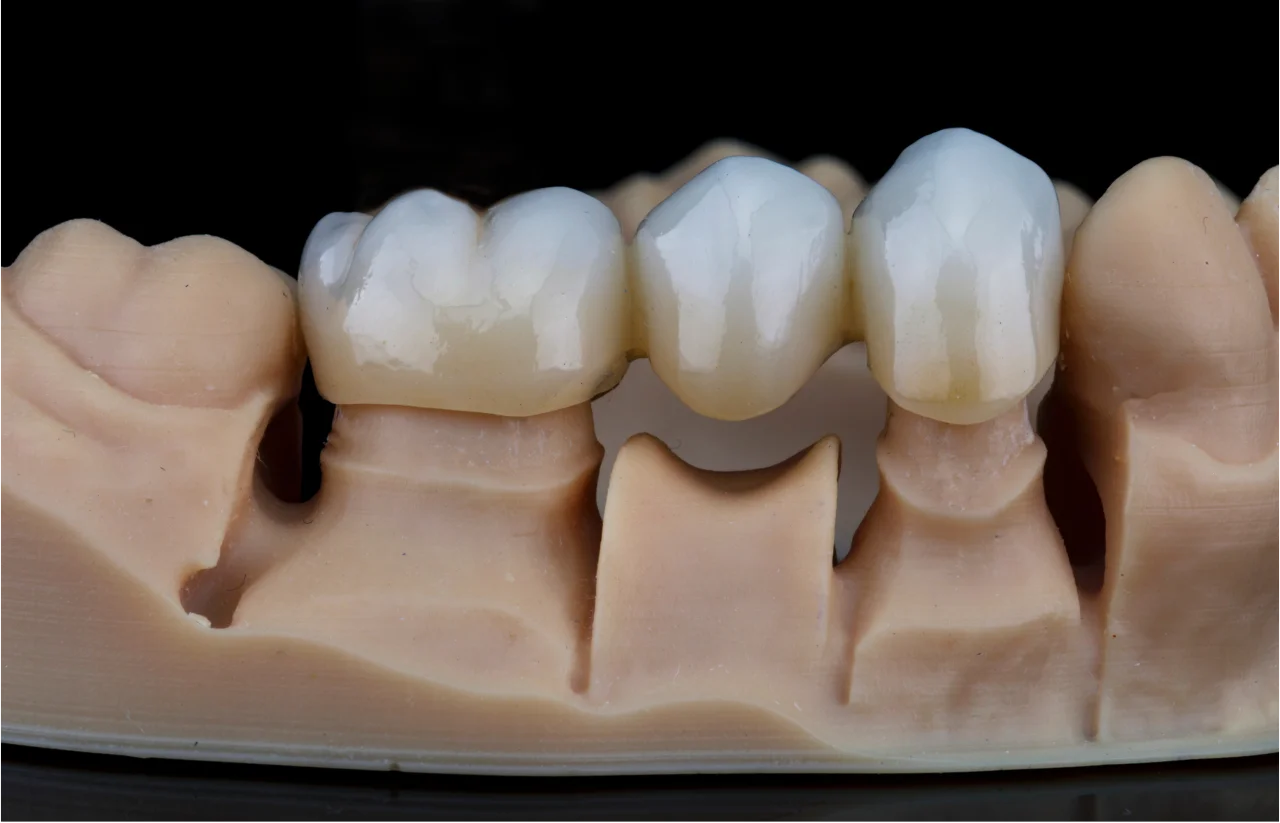
A dental bridge consists of one or more artificial teeth (pontics) held in place by dental crowns cemented onto the teeth adjacent to the gap (abutment teeth). According to the American Dental Association, bridges are a proven tooth replacement option that can last 10-15 years with proper care.
Traditional bridges require reshaping the abutment teeth by removing enamel to create space for the crowns. While this permanently alters healthy teeth, it creates a strong, stable bridge that functions like natural teeth. The bridge is custom-made in a dental laboratory to match your natural teeth in color, shape, and size.
Bridges prevent remaining teeth from drifting into gaps (which causes bite problems), restore proper chewing function, maintain facial shape by supporting lips and cheeks, and distribute bite forces properly across your dental arch.
Types of Dental Bridges
Traditional Fixed Bridges
Traditional bridges are the most common type, ideal for replacing one to three consecutive missing teeth when you have healthy natural teeth on both sides of the gap. The abutment teeth are prepared (reshaped), and crowns are placed on them supporting the artificial tooth or teeth between them.
Advantages: Very strong and stable, long-lasting (10-15+ years), functions like natural teeth, excellent chewing ability.
Considerations: Requires permanently altering two healthy teeth, abutment teeth bear additional chewing forces.
Cantilever Bridges
Cantilever bridges anchor to teeth on only one side of the gap—useful when you have teeth on just one side or when preserving teeth on one side is preferable. These are less common and typically used only for front teeth experiencing lower chewing forces.
Advantages: Preserves teeth on one side of the gap, works when traditional bridges aren't feasible.
Considerations: Less stable than traditional bridges, not suitable for back teeth with heavy chewing forces, places more stress on abutment teeth.
Maryland Bridges (Resin-Bonded Bridges)
Maryland bridges use metal or porcelain wings bonded to the back of adjacent teeth rather than requiring full crowns. This conservative approach preserves more natural tooth structure.
Advantages: Minimal tooth preparation (no crowns needed), preserves enamel on adjacent teeth, more reversible than traditional bridges, lower cost.
Considerations: Less strong than traditional bridges, not suitable for back teeth, metal wings may show through thin enamel, occasional debonding requires rebonding.
Ideal for: Front teeth replacement, younger patients wanting conservative treatment, temporary replacement while awaiting implants.
Implant-Supported Bridges
Implant-supported bridges use dental implants rather than natural teeth for support. Typically, two implants support a bridge of three or four teeth. This approach preserves natural teeth completely while providing superior stability.
Advantages: Doesn't require altering natural teeth, prevents bone loss beneath the bridge, most stable and long-lasting option, closest to having natural teeth.
Considerations: Requires surgery, higher initial cost, longer treatment timeline (4-6 months).
Who Can Get Dental Bridges?
The Dental Bridge Process
Initial Consultation and Planning
Your dentist examines the gap, evaluates abutment teeth health, and takes X-rays assessing roots and bone. We discuss bridge types suitable for your situation and create a treatment plan. If you need tooth extraction first, we coordinate timing allowing proper healing.
Digital impressions or traditional molds document your current bite and tooth positions for precise bridge design.
First Appointment: Tooth Preparation
For traditional bridges, your dentist reshapes the abutment teeth, removing enamel to create space for the crowns. Local anesthesia ensures comfortable treatment. After preparation, detailed impressions are taken showing the prepared teeth, opposing teeth, and your bite relationship.
A temporary bridge is fabricated and cemented protecting the prepared teeth and maintaining function and appearance while your permanent bridge is being made (typically 2-3 weeks).
Laboratory Fabrication
Skilled dental technicians use your impressions creating a custom bridge. They carefully match tooth color, shape, and size ensuring natural appearance. High-quality materials like porcelain or zirconia provide strength, durability, and aesthetics.
Second Appointment: Bridge Placement
When your permanent bridge is ready, we remove the temporary bridge and try in the new bridge. We check fit, bite, color, and comfort, making any needed adjustments. Once everything is perfect, the bridge is permanently cemented to the abutment teeth.
You leave with a restored smile and full chewing function. Some sensitivity to temperature is normal for a few days as teeth adjust.
Dental Bridges vs. Other Tooth Replacement Options
Bridges vs. Dental Implants
Dental implants replace tooth roots, preserving bone and not requiring alteration of adjacent teeth. Implants typically last longer than bridges (20-30+ years vs. 10-15 years) but cost more initially and require surgery.
Bridges work well when adjacent teeth already need crowns (killing two birds with one stone) or when implant surgery isn't desired or feasible due to health conditions or insufficient bone.
Bridges vs. Dentures
Partial dentures are removable and don't require altering adjacent teeth. However, bridges provide superior stability, better chewing function, and more natural feel. Bridges don't slip or click like dentures can.
Bridges work best for replacing one to three teeth. For more extensive tooth loss, dentures or implant-supported dentures become more practical and economical.
Bridges vs. Doing Nothing
Leaving gaps from missing teeth causes significant problems. Adjacent teeth drift and tilt into empty spaces, creating bite problems and increasing cavity risk. Opposing teeth over-erupt. Chewing efficiency decreases. Bone deteriorates beneath the gap.
Replacing missing teeth with bridges prevents these complications, preserving your oral health long-term.
Caring for Your Dental Bridge
Daily Oral Hygiene
Brush twice daily with fluoride toothpaste, paying special attention where the bridge meets your gums. While the artificial tooth can't get cavities, the abutment teeth (underneath the crowns) can decay if plaque accumulates at the margins.
Floss daily using special floss threaders or bridge floss allowing you to clean beneath the pontic and around abutment teeth. Research in the Journal of the American Dental Association confirms that proper hygiene around bridges is essential for longevity.
Water flossers effectively clean around bridges, especially beneath the pontic where food can trap.
Regular Dental Visits
Attend dental cleanings every six months. Your hygienist professionally cleans around the bridge, removing tartar you can't reach at home. Your dentist examines the bridge checking for signs of wear, loose cement, or decay around margins.
Protect from Damage
Avoid chewing ice, hard candy, or other extremely hard objects that could crack or chip the bridge. If you grind your teeth, wear a nightguard protecting both your bridge and natural teeth from excessive forces.
Diet Considerations
While bridges restore good chewing function, use reasonable caution with very sticky or hard foods. Caramels, taffy, and similar sticky items can pull bridges loose. According to the Centers for Disease Control and Prevention, maintaining good oral health habits protects dental work investment.
How Long Do Bridges Last?
Dental bridges typically last 10-15 years, though many patients enjoy their bridges for 20+ years with excellent care. Longevity depends on bridge type and location, oral hygiene habits, regular dental visits, grinding or clenching habits, and overall health.
Implant-supported bridges generally last longer than traditional bridges because implants don't decay like natural teeth. Eventually, the porcelain may wear or chip requiring bridge replacement, but this is usually straightforward.
When Bridges Need Replacement
Bridges may need replacement when cement weakens, causing the bridge to loosen, porcelain chips or cracks affecting appearance or function, abutment teeth develop decay beneath crowns, or gum tissue recedes exposing bridge margins.
Regular dental checkups allow early detection of problems, often allowing repair rather than complete replacement. Maintaining excellent oral hygiene significantly extends bridge lifespan.
Bridges for Different Situations
Single Missing Tooth
One missing tooth is ideally replaced with a single tooth implant preserving adjacent teeth. However, if adjacent teeth already need crowns or implants aren't suitable, a three-unit bridge (two crowns plus one pontic) works well.
Two or Three Missing Teeth
Bridges excel at replacing two or three consecutive missing teeth. A bridge spanning this gap provides excellent function and appearance at reasonable cost.
Multiple Non-Consecutive Missing Teeth
Multiple gaps require multiple bridges or alternative solutions like partial dentures or implant-supported bridges. We evaluate the most practical, economical approach for your specific situation.
Front Teeth vs. Back Teeth
Front tooth bridges prioritize aesthetics—porcelain creates highly natural appearance. Back tooth bridges prioritize strength, sometimes using porcelain fused to metal or zirconia for maximum durability against heavy chewing forces.
Related Services
Family Dentistry - Comprehensive dental care including preventive services helping you keep natural teeth.
Dental Crowns - Bridges use crowns on abutment teeth; standalone crowns restore individual damaged teeth.
Dental Implants - Permanent tooth replacement alternative preserving adjacent teeth and bone.
Tooth Extractions - Professional tooth removal when teeth cannot be saved, preparing for bridges.
Dentures - Removable tooth replacement for more extensive tooth loss.
Implant-Supported Dentures - Secure dentures anchored by implants for superior stability.
Replace Missing Teeth with Dental Bridges
Restore your smile with a custom dental bridge at Davis Dental Group in South Tacoma. Our experienced team creates natural-looking, durable bridges that function like natural teeth. Schedule your consultation to explore bridge options perfect for your situation.
Serving South Tacoma, Graham, Roy, Spanaway, Frederickson, Eatonville, and JBLM military families with quality restorative dentistry.
Schedule Your Bridge Consultation
Call to Discuss Tooth Replacement
Major PPO insurances accepted. Fixed tooth replacement with custom dental bridges.
Why Choose Davis Dental Group for Dental Bridges in Tacoma?
- Advanced 3D Scanning Technology: Precise imaging for accurate implant planning and placement. Better planning means better results.
- Walk-Ins Welcome: Stop by our Tacoma office anytime for consultations—no appointment needed.
- Same-Day Consultations: We offer same-day appointments when available, so you don't have to wait.
- Free Consultations: Get expert guidance with no obligation. We'll evaluate your situation and discuss your options.
- Comprehensive Care in One Location: From consultation to implant placement to final restoration, everything happens right here. No referrals to multiple specialists.
- Experienced Team: Our dental professionals have extensive experience in implant dentistry and prioritize your comfort throughout treatment.